Tameshigiri - The Art of Cutting
Cutting bodies: Illustrations from period Japanese manuals on tameshigiri and suemonogiri
The origins of modern test cutting descend from a much more violent era. Modern tameshigiri is defined as the testing of the skill of the practitioner by cutting objects, usually rolled straw mats or bundled straw.
In the late Edo Period (1603 t0 1868) and early Meiji Period (1868 to 1912) — where a smith or the owner of a blade might wish to prove the its quality and cutting power — tameshigiri was defined as testing the sword against the object being cut. Under this definition, helmets (kabuto), armour (yoroi), and heavy sections of bamboo or wood might be cut. This testing process, if incorrectly carried out by unskilled practitioners, or where the quality of the blade was not the best, could easily result in the destruction of the sword.
This same time periods also saw the practice of the extreme form of tameshigiri known as aratameshi — testing a sword to destruction to see how much abuse it could take. As I mention in the articled linked to, many believe this practice was an attempt by the Japanese to prove the superiority of their weapons over European blades.
In even earlier times (Edo period and before) another version of tameshigiri was performed on the bodies of executed criminals. This practice is more properly defined as suemonogiri, “the cutting of tied objects”.
The reason for this is quite simple; the bodies of criminals would be tied into various positions to allow the test cutter to make the appropriate cuts.
In this grisly test, positioning was important, as the blades would often bisect the criminal’s body along lines designed to cut through the maximum amount of bone possible. It required extreme skill on the part of the tester, who must cut precisely or potentially break the blade.
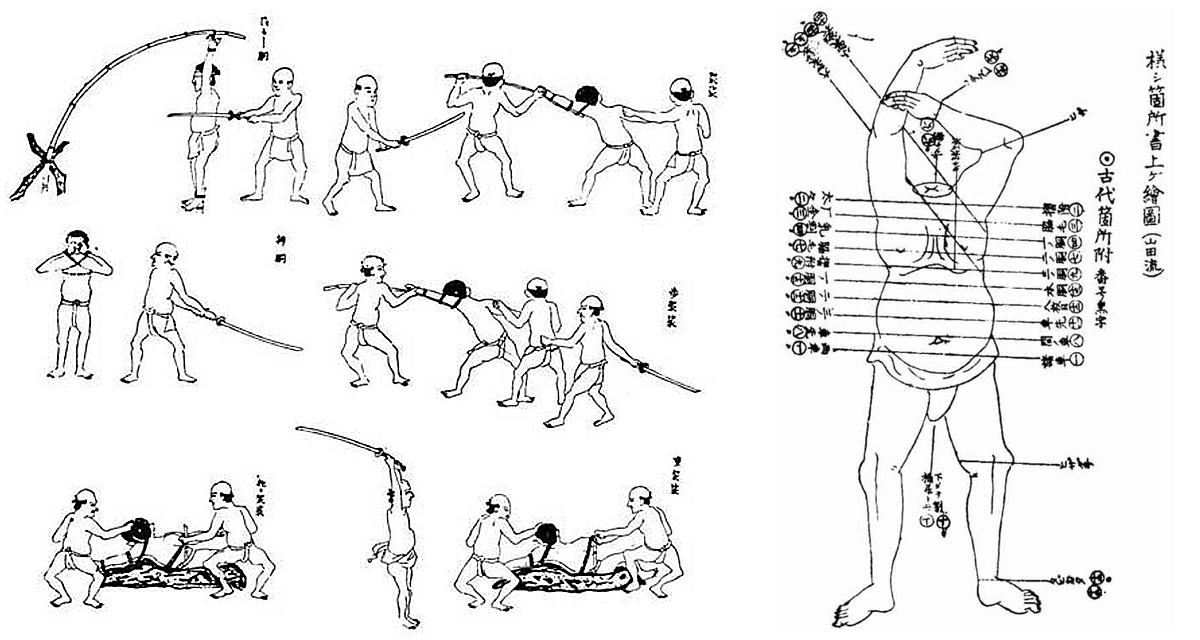
from Kaihô Kenjaku (“Standard for evaluation of a sword”) by Yamada Asaemon Yoshitoshi (1797)
That such a manual existed for the training of test cutters shows the importance this position held. At certain points of Japanese history professional test cutters known as “otameshi-geisha” were in great demand.
Less famous test cutters were known as suemono-shi; these were skilled samurai who would perform cutting for clients.
There are lists of famous otameshi-geisha from the Edo Period still in existence, one of which was translated by C. U. Guido Shiller (2007).
During this period the the Yamada family was the most famous of the otameshi-geisha. They were of such fame and skill that the two surviving books describing how to properly conduct cutting on a human body were written by Yamada family members: the Kaihô Kenjaku (“Standard for evaluation of a sword“) by Yamada Asaemon Yoshitoshi (1797), and the Kokon Kaji Bikô by Yamada Asaemon Yoshimutsu (1830). Both these books held much more information than just how to conduct test-cutting on a body of course, containing details on smiths, the quality of known swords, and much more.
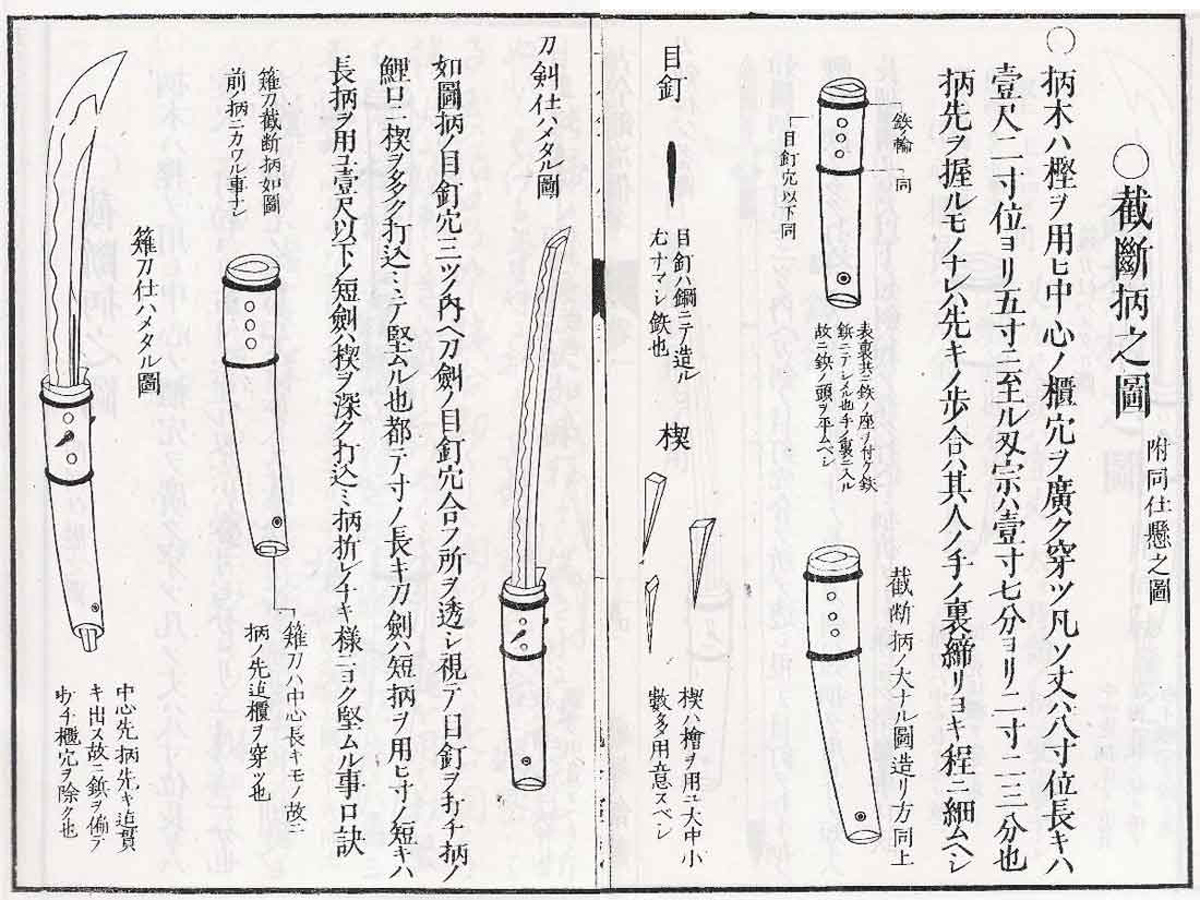
The Kokon Kaji Bikô also includes instructions on how to build and use an extremely long handle (tsuka) which gave the tester much more leverage in attempting a cut.