Toshitsugu Takamatsu - 高松 寿嗣
Toshitsugu Takamatsu
高松 寿嗣
The teacher behind the teachers. The man Masaaki Hatsumi called divine — and the bridge between the old shinobi traditions and the modern Bujinkan.
History
Toshitsugu (Chōsui) Takamatsu, also known as Mōko no Tora, was a Sensei of martial arts whose true inheritor became Masaaki Hatsumi — founder of the Bujinkan system and Bujinkan Budō Taijutsu.
Hatsumi still lives in Noda-shi, Chiba Prefecture. He named his dōjō after his teacher, Takamatsu-sensei, whom he believed to be divine. Takamatsu died in 1972 of illness, survived by his wife and adopted daughter. His wife died later, in 1991.
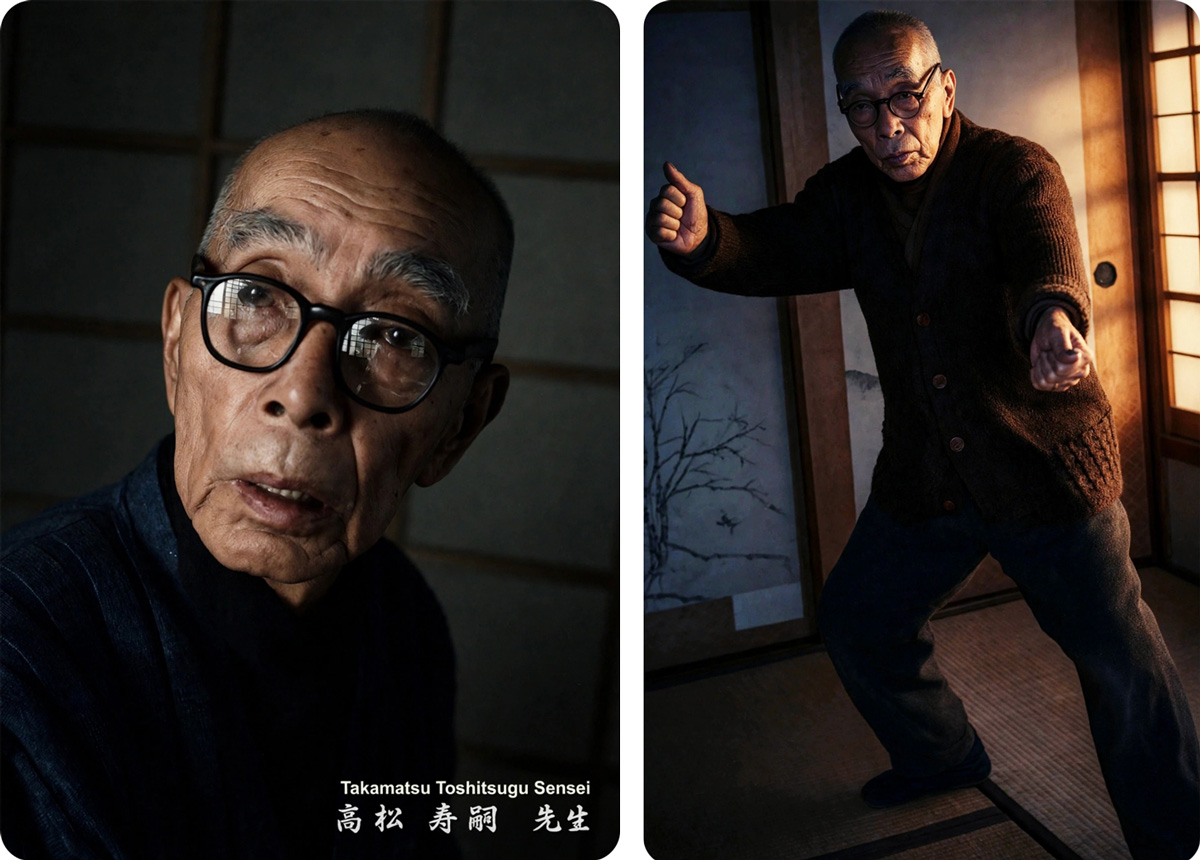
33rd Sōke of Togakure Ryū
Martial names
His real first name was Hisatsugu, later changed to Toshitsugu — same kanji, different pronunciation. His posthumous name is Junshokakuju Zenjomon. His house — a motel / tea-inn — stood in front of Kashihara Shrine, Kashihara City, Nara Prefecture.
- ChōsuiPure Water
- UohWinged Lord
- NakimisoCry-baby
- KotenguLittle Goblin
- Mōko no ToraMongolian Tiger
- KikakuDemon Horns
- YokuohRunning in the Sky Old Man
- KotaroYoung Tiger
- Shōjuken—
- GarakutabujinEnjoy Sketching Martial Artist
- YakissobaNoodles
- Kozan • Kyosha • Jutaro—
Personal life
Married to Uno Tane (28 June 1897 – 4 February 1991). They adopted a girl named Yoshiko.
His father, Takamatsu Gishin Yasaburo, owned a match factory and received the Dai-Ajari (Master) title in Kumano Shugendō. His dōjō was named “Sakushin” — Cultivating Spirit.
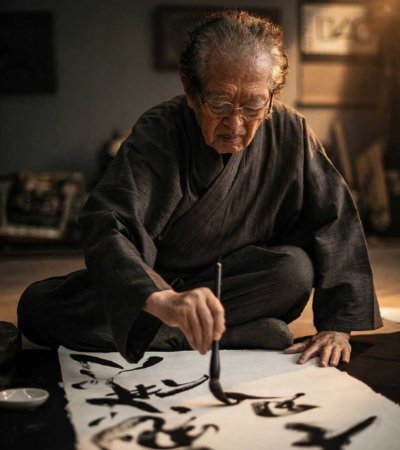
He had a cat named Jirō and loved painting very much.
Martial arts training
His grandfather on his mother’s side, Toda Shinryuken Masamitsu, was a well-known instructor who owned a dōjō and bone-setting (sekkotsu) clinic. At age nine, the weak and shy Takamatsu — often called a cry-baby — was sent to his grandfather in Kobe to strengthen up. By age 13, he had no peer in Kobe.
From his grandfather he learned ninjutsu and inherited the position of Sōke for:
A life on the road
Age 21 — Travelled through Mongolia to China. Taught martial arts, fought life-or-death battles, taught at an English school in China with over 1,000 students. Bodyguard of the last Chinese Emperor, Puyi.
1919 — Became a Tendai Buddhist priest.
1921 — Permitted to copy the Kukishinden Ryū scrolls (+ Amatsu Tatara scrolls) of the Kuki family. Friend of Jigorō Kanō (Kōdōkan Jūdō), and caretaker of his younger brother.
1945 — During WWII the original scrolls were destroyed. In 1949 he presented new scrolls to the Kuki family, rewritten from his copies and memory.
May 1950 — Established Kashihara Shobukai in Nara Prefecture. Spent the post-war years developing successors, sponsoring Magokuro-kai-musubi tsudoi meetings and lectures on Amatsu Tatara.
He was deaf in one ear from one of his fights. He said a Shaolin fighter and a Shorinji boxer were the most dangerous enemies he ever met. He was buried at Kumedera Cemetery in Nara. He wrote articles for the Tokyo Times and was well known in Japan as a Grandmaster of Jū-Jutsu and Bōjutsu.
His business card
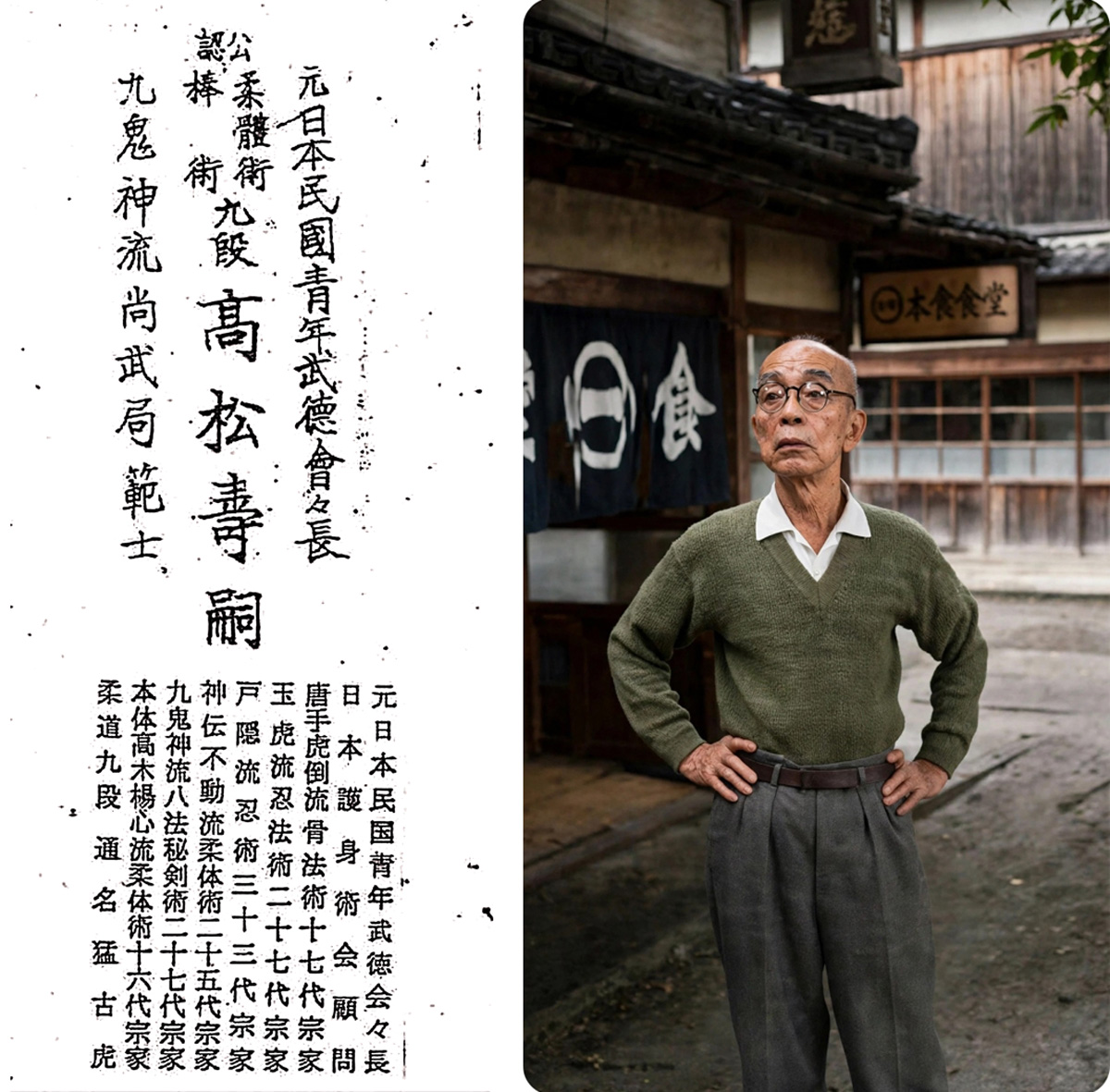
✦ Handwritten
認公
柔體術
棒術
九段
高松壽嗣
九鬼神流尚武局範士
Kōnin — official recognition / certification
Moto Nippon Minkoku Seinen Butokukai kaichō
Jūtaijutsu, Bōjutsu — 9th dan
Takamatsu Toshitsugu
Kukishin-ryū Shōbu Kyoku Hanshi
✦ Printed
日本護身術会顧問
唐手虎倒流骨法術十七代宗家
玉虎流忍法術二十七代宗家
戸隠流忍術三十三代宗家
神伝不動流柔体術二十五代宗家
九鬼神流八法秘剣術二十七代宗家
本体高木楊心流柔体術十六代宗家
柔道九段 通名 猛古虎
Moto Nippon Minkoku Seinen Butokukai kaichō
Nippon Goshinjutsu Kai-komon (association advisor)
Tōde Kotō-ryū koppōjutsu — 17th Sōke
Gyokkō-ryū ninpōjutsu — 27th Sōke
Togakure-ryū ninjutsu — 33rd Sōke
Shinden Fudō-ryū jūtaijutsu — 25th Sōke
Kukishin-ryū happō-bikenjutsu — 27th Sōke
Hontai Takagi Yōshin-ryū jūtaijutsu — 16th Sōke
Jūdō kyūdan — Tsūmei Mōko-no-Tora